Unlock the Editor’s Digest for free
Roula Khalaf, Editor of the FT, selects her favourite stories in this weekly newsletter.
“We used to get people saying, ‘you’re making in India: shouldn’t you be cheaper?’ — with no regard to what we were producing or the wages we’re paying,” says Deepak Srinath, co-founder of Bengaluru-based Phantom Hands, which retails in 20 countries. “That went away once people started seeing the quality of our products.”
With a construction boom and a young population well versed in international influences — and with increasing disposable income — India’s contemporary furniture scene is flourishing, its visual language a refreshed take on its craft heritage. As the global design industry confronts the consequences of mass production, could the label of “made in India” prove a powerful advantage?

Many exhibitors at Design Mumbai, a fair holding its second annual edition this month, are putting this to the test — from Kolkata’s Tabula Rasa, whose gently curved Kaya Bench in solid wood, repoussé brass and black fabric is inspired by the stillness of a crane, to Wannas, with its totemic wooden stools.
Srinath’s Phantom Hands collaborates with more than 100 artisans and designers; here it will show reinterpretations of furniture by the late Sri Lankan architect Geoffrey Bawa, including woven cane chairs with sweeping, elegant lines and tables topped with marble offcuts.
India has maintained a strong connection with the handmade. More than 3,000 crafts are thought to sustain livelihoods for an estimated 7mn people. “The words India and craft go hand in hand — not just as a day job but as a lifestyle,” says Sejal Jain, director of Mumbai-based design gallery Aequo, which pairs international designers with Indian craft practitioners.

“The key social issue in India at the moment is the environment,” adds the artist Valay Gada, who often uses recycled metal, ceramics and glass to create furniture and objects inspired by the ancient philosophy of ahimsa: to do no harm.
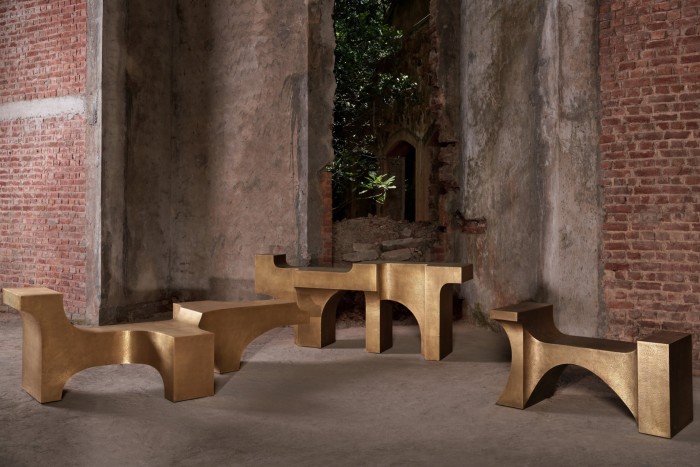
The long-term viability of craft is, however, precarious. “Newer generations [often] have no desire to take forward the family occupation — seeing it as a trap that keeps them in the past,” says the designer Saif Faisal, whose latest furniture and accessories are a graphic reincarnation of the 14th-century bidriware metalwork technique from Karnataka. But, he says, “Sustainability is not just about being green or less energy intensive: culture also has to be accounted for.”

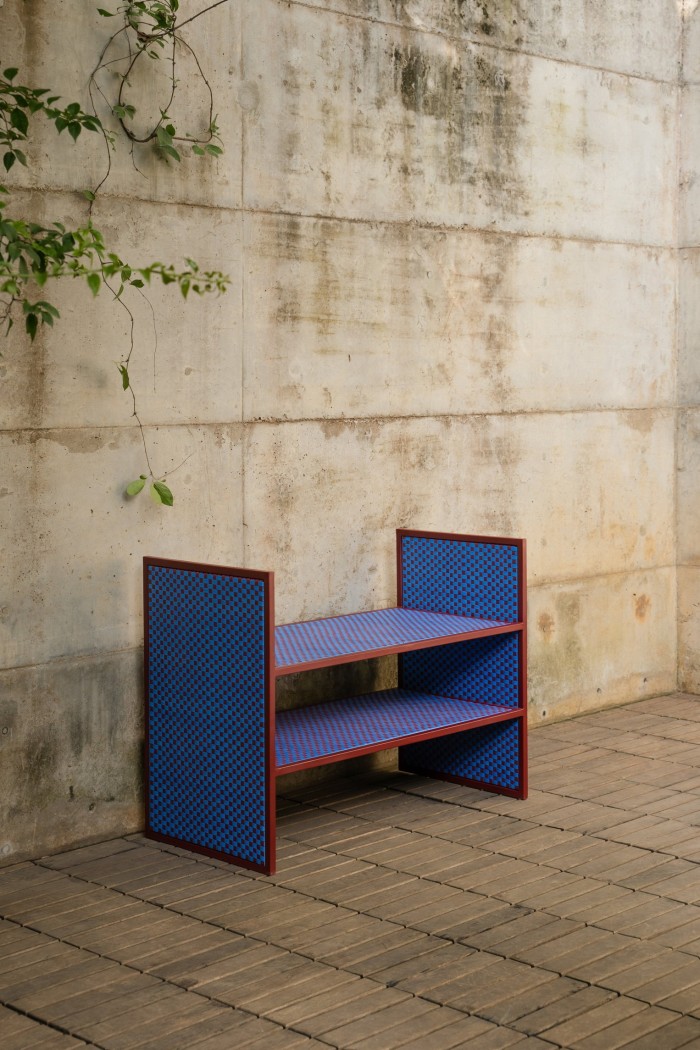
Many Indian brands are tackling this head on. Jagdish Sutar creates seating inspired by charpais, traditional beds with woven surfaces. Vikram Goyal’s studio uses traditional metal techniques such as repoussé and hollowed joinery. At Design Mumbai, Iteesha Agrawal’s Chandigarh-based brand Sarvatva — Sanskrit for “wholeness” — will show a chair and coffee table that use a 400-year-old wood chiselling method. “The idea is to contemporise crafts, without losing their essence,” she says.
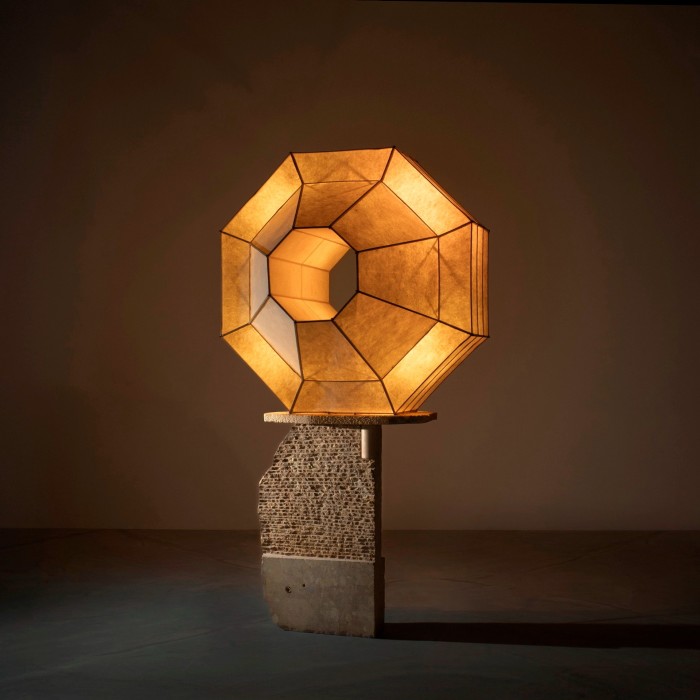
Hyperlocal influences include Studio Raw Material’s sculptural furniture, made using marble from Makrana, Rajasthan, with jagged edges and seams, as well as lighting and objects in a hemp paper that has been made since the 15th century — but now only by one family. Architect David Joe Thomas’s checkerboard designs for Kaash are inspired by a group of women in Chettinad who use colourful tape to weave lunch boxes.
Surat-based Priyanka Shah challenges the continued schism between design and actual making. “I am suspicious of the term design,” she says, “it looks down on making [which is seen as being] practised by people whose traditional roles in society are ‘beneath’ those with education.”
Her studio, Shed, has created a glass cabinet inspired by the pyramid architecture of south Indian temples, with lost wax-cast brass joints echoing kolam patterns, traditionally drawn on floors for special occasions. Craft, she acknowledges, can be “painful, tedious, slow”. But, she adds: “I also know that it’s what will vitalise us. I am on an ongoing quest to simmer things a bit longer.”
Design Mumbai, Jio World Garden, Mumbai, November 26-29; designmumbai.com
Find out about our latest stories first — follow @ft_houseandhome on Instagram