This article is an on-site version of our FirstFT newsletter. Subscribers can sign up to our Asia, Europe/Africa or Americas edition to get the newsletter delivered every weekday morning. Explore all of our newsletters here
Good morning and welcome back to FirstFT Asia. In today’s newsletter:
Nvidia blows past Wall St expectations
Singapore divided over fate of founding father’s home
The ‘Takaichi trade’ gears up
Nvidia grew sales of the chips at the heart of the artificial intelligence boom even faster than Wall Street anticipated in its latest quarter, reassuring investors that Big Tech’s AI spending spree is set to continue.
Nvidia’s results: Revenue was $57bn in the three months to the end of October, up 62 per cent year-on-year, and beating consensus estimates of $55bn compiled by Visible Alpha. Nvidia’s revenue forecast for the current quarter was $65bn, well above Wall Street expectations of $62bn. Shares in the chip giant climbed nearly 4 per cent in after-hours trading following the announcement, after rising 2.8 per cent earlier in the day.
“Blackwell sales are off the charts, and cloud GPUs are sold out,” said Jensen Huang, Nvidia’s chief executive, referring to its latest graphics processing units, which have become essential to training and running AI systems such as those that power OpenAI’s ChatGPT.
AI bellwether: The confident outlook from the $4.5tn chip company at the centre of a global AI boom comes after a sell-off in tech stocks in recent weeks. Investors have grown concerned at the lofty valuations of big US tech groups and their huge capital expenditure on chips and data centres. Nvidia’s results are seen as a bellwether for the health of the AI sector because its advanced chips power cutting-edge models such as ChatGPT.
Here’s what else we’re keeping tabs on today:
Economic data: Hong Kong publishes October CPI inflation data.
Monetary policy: The People’s Bank of China is expected to leave benchmark lending rates unchanged for a sixth straight month. (Reuters)
Join us in December for the ninth edition of The Global Boardroom, the Financial Times’ award-winning digital conference. The event will bring together more than 100 leaders in business, policy and finance including Bank of Japan Governor Kazuo Ueda and European Central Bank President Christine Lagarde for three days of in-depth analysis and discussion. Register here.
Five more top stories
1. The Dutch government has suspended its intervention in chipmaker Nexperia in an effort to ease tensions with Beijing and prevent a potential global shutdown of car plants. The Dutch government in October seized control of Nexperia — which is based in the Netherlands but majority owned by the Chinese technology group — and forced out the company’s Chinese chief executive.
2. Singapore’s stock exchange has struck a deal with Nasdaq to allow companies to list at the two venues simultaneously. The agreement, which is due to go live next year, is designed to stem the flow of the city-state’s fastest-growing companies going overseas to list.
3. The Trump administration and Russian officials have drawn up a sweeping new proposal to end Russia’s war in Ukraine that envisions major concessions from Kyiv and urged President Volodymyr Zelenskyy to accept it. One of the people briefed on the plan said it would amount to Ukraine giving up its sovereignty and called the effort a Russian attempt to “play” the Trump administration.
Russia-Iran ties: Iranian scientists and nuclear experts made a second covert visit to Russia last year, in what the US claims has been a push to obtain sensitive technologies with potential nuclear weapons applications.
4. Members of the Federal Reserve’s policy-setting committee expressed “strongly differing views” over whether to cut interest rates next month, according to minutes of the central bank’s October meeting. The deepening schism over borrowing costs comes as inflation creeps upwards and after the government shutdown delayed the release of critical economic data.
5. Kering needs to reduce “over-dependency” on its top brand Gucci and downsize its entire retail network, the luxury group’s new chief executive Luca de Meo has said in a memo. The internal memo, circulated in early October, outlines a multiyear plan to revive Kering’s fortunes.
News in-depth
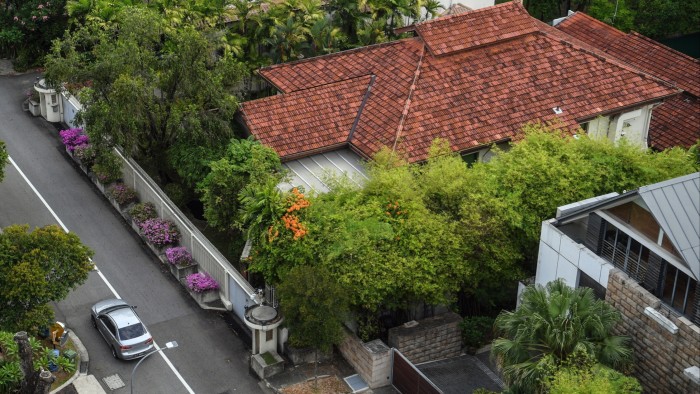
This month, Singapore announced its intention to turn founding leader Lee Kuan Yew’s former home into a national monument, in contravention of the late prime minister’s calls for it to be demolished and in defiance of public opinion. But the debate over the future of the semi-derelict house at 38 Oxley Road is about more than whether Lee’s wishes are respected, the FT’s Singapore correspondent Owen Walker reports.
We’re also reading . . .
India’s tech evolution: The sector is expanding far beyond its giant IT service companies, writes Gaurav Dalmia.
‘Moral crisis’: A massive betting scandal has rocked Turkish football, leading to the suspension of hundreds of players and halting play in lower-tier leagues. But many say they are scapegoats.
The ‘Donroe Doctrine’: For Latin Americans, who long complained of being Washington’s “forgotten continent”, Trump’s new focus on the region is unsettling.
Chart of the day
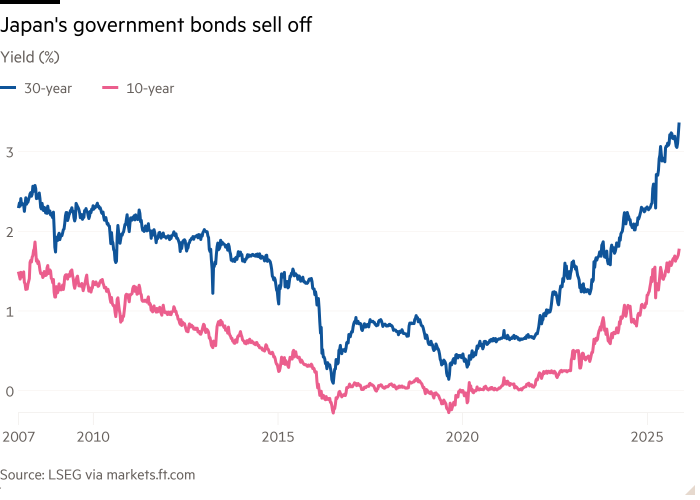
Japan’s long-term borrowing costs have surged to their highest in decades, in an intensifying “Takaichi trade” that the new administration will unveil a much larger fiscal spending package than originally expected.
Take a break from the news . . .
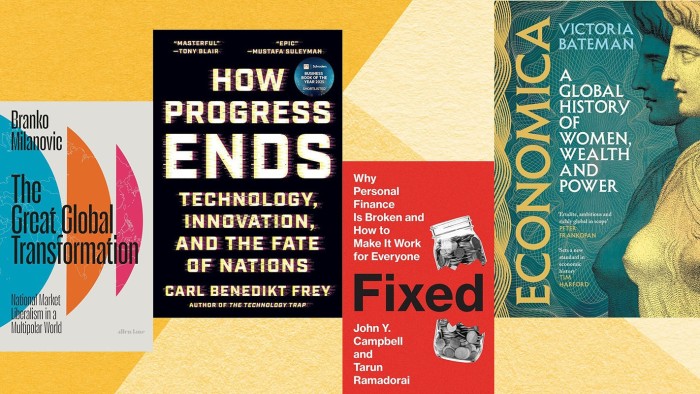
Martin Wolf selects his favourite economics books of the year, highlighting topics from China’s challenge to US hegemony, the climate crisis and the inside story of the 1929 Wall Street crash.