Good morning. Later this week, Nitish Kumar will be sworn in for the 10th time as the chief minister of Bihar. Talk about job stickiness! Meanwhile, in Bangladesh, a special court has sentenced former leader Sheikh Hasina to death in absentia for crimes against humanity. Hasina now lives in India.
After an action-packed but fun 17 days, I leave London today. It was fantastic to meet so many of you; thank you for all the great conversations over many beers and coffees. I’m stopping in Dubai for a few days before heading home at the weekend. My colleague Andres Schipani will step in for me this Friday.
Trade TurmOil
Is India’s trade deal in turmoil? Let’s take stock. In the past few weeks, remarks from Donald Trump and Indian officials have suggested a deal was imminent, after the US president said Prime Minister Narendra Modi had pledged to stop buying Russian oil. But the events of last week have been a bit puzzling.
On Sunday, Trump stepped up threats to “severely sanction” buyers of Russian oil, backing measures by the US Congress that include implementing 500 per cent tariffs. Reports that emerged a few days earlier suggest that contrary to the public narrative, India has continued to buy Russian oil. India acquired €3.1bn worth of fossil fuels from Russia last month, making it the second largest buyer after China, according to the Centre for Research on Energy and Clean Air.
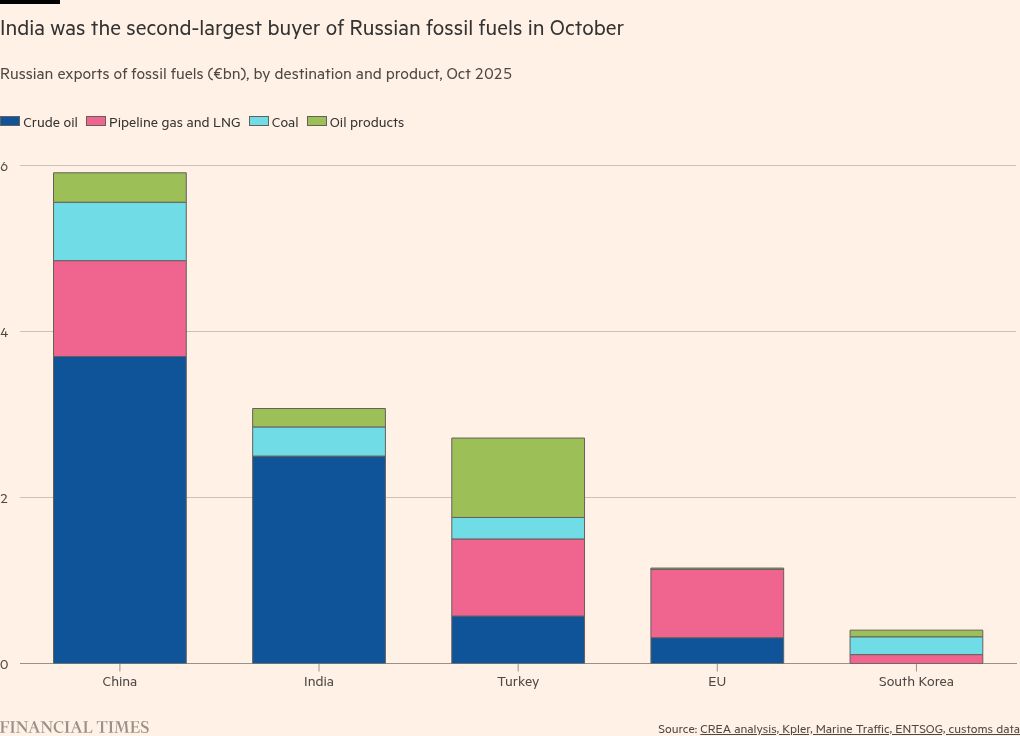
India spent €2.5bn of that on crude, an 11 per cent increase from the month before. More significantly, the report points out that while two-thirds of this was imported by private refiners, state-owned refineries have almost doubled their month-on-month volumes in October.
Are Trump’s renewed threat and India’s defiance another bump in the road to the elusive trade deal? It’s hard to tell. India is taking measures to keep Trump happy. Yesterday, the government announced it would buy 2.2mn tonnes of liquefied petroleum gas from the US, or about 10 per cent of India’s annual LPG imports. Analysts say this makes little economic sense — the Gulf would be far nearer for LPG, and hence cheaper — but the intended gains are political, not monetary: New Delhi’s move would give Trump a win he can talk up to his constituents.
Regardless of the prospects of a deal, the government is bolstering measures to help India’s export sector. On Wednesday, the cabinet announced its decision to extend additional credit facilities up to Rs200bn ($2.35bn) to exporters, and also approved a six-year scheme for export promotion, with an outlay of Rs250bn that was announced in the Budget this year. This was followed on Thursday with the Reserve Bank of India relaxing foreign exchange rules governing proceeds from exports.
India is right in anticipating that signing a trade deal with the US is not necessarily the end of tariff worries. Trump’s administration has been volatile and it has not maintained the sanctity of some of the deals it has signed. The regulatory and administrative reforms that have been introduced in the past couple of months indicate an understanding that the world has changed, and that the trials and tribulations of this year are not a temporary blip before things fall back to old ways. This is the new normal.
What’s your take on India’s continued procurement of Russian oil? Hit reply or email us at indiabrief@ft.com
Recommended stories
Is Nitish Kumar the Joe Biden of Bihar? Ruchir Sharma thinks so.
A legal battle is raging over the future of Bangalore Palace.
Foreign investors are returning to China’s stock market.
Trump has made a U-turn and is now backing a vote to release the Epstein files.
Goldman Sachs is on the brink of its best M&A performance in 24 years.
What’s your number? Bankers’ retirement fund targets are absurd, writes Craig Coben.
Privacy protection
India’s digital personal data protection rules have finally started coming into force, with some provisions taking effect immediately and others spread over an 18-month period. The phased approach is intended to give companies time to set up systems in order to ensure compliance.
The rules classify companies that collect users’ personal data as “data fiduciaries” and make them responsible for obtaining “informed” consent from their users. Similar to European rules, companies have to give a summary of what data they are collecting and how it will be used. Users have the right to demand that their data be modified or erased, and if they have been inactive for a specified period, these companies must delete the data. Large companies are also mandated to appoint a “data protection officer” who will be in charge of maintaining compliance with the rules. Data breaches have to be reported immediately, and failure to comply can attract fines ranging from Rs10,000 to Rs2.5bn. The act has also made it harder to collect data from children.
The regulation has been in the works for the past eight years and has gone through three significant drafts. Several provisions — especially with regard to data localisation (storing data in India) — have been diluted, after large technology companies such as Meta and Google pushed back.
The government has also used these regulations to dilute the Right to Information Act, which allowed citizens to understand and monitor government functioning and helped them identify corrupt officials. The new rules make this difficult by removing the obligation of the government department to provide “personal information” of officials on grounds of public interest. The broad definition of personal information will be a constraint for the public to access data, according to activists.
Overall, the new rules pave the way for users to finally have some measure of control over their personal data. A large majority of Indians are pretty sanguine about giving out their data, something that is responsible for a significant amount of digital fraud in the country. The rules, once implemented, will hold companies responsible for preserving data, and some early instances of holding them accountable will go a long way in restoring faith. The biggest challenge for India is that it has a large population that is spread over various social and educational classes. While the elite may be able to better protect themselves, it is the government’s responsibility to ensure that everyone’s data is safe if it wants to pursue its “digital India” ambitions.
Go figure
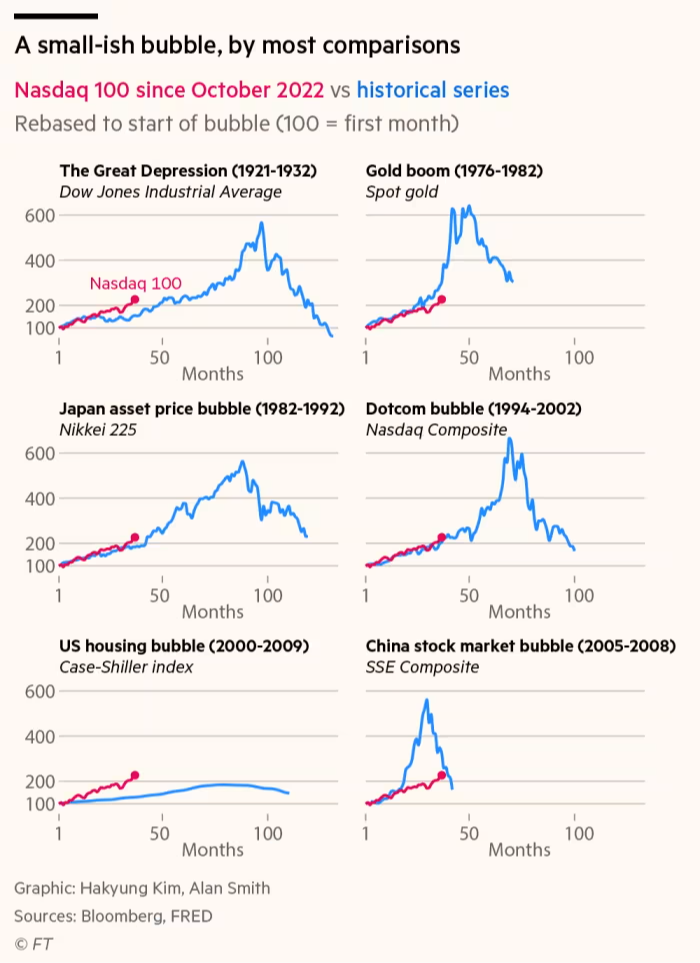
Is the US market in a bubble? Perhaps a small-ish one.
My mantra
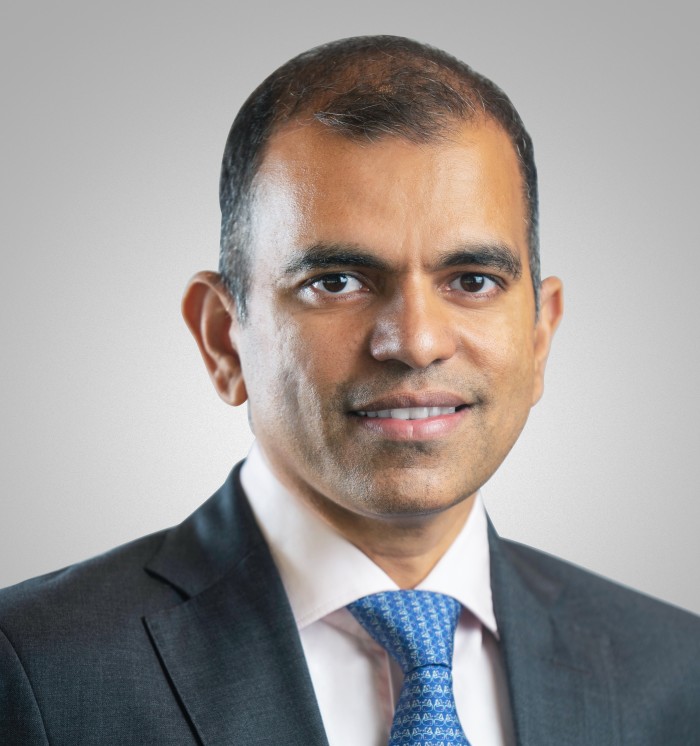
“Like in sport, success comes from playing smart but never skipping the hard yards — because it’s the small, disciplined habits that compound into the big wins.”
Pranav Haridasan, chief executive, Axis Securities
Each week, we invite a successful business leader to tell us their mantra for work and life. Want to know what your boss is thinking? Nominate them by replying to indiabrief@ft.com
Quick question
Both SoftBank and Peter Thiel have sold their holdings in Nvidia in the recent past. Is the AI bull run over? Tell us here.
Buzzer round
On Friday, we asked: Which organisation is going to award a “peace prize” next month in Washington?
The answer is . . . Fifa! (Any guesses on who the first winner will be and why it is Donald Trump?)
Dhanush Dinesh was first with the right answer, followed by Anuj Balaji, PV Kannan, Aniruddha Dutta and Prasanna Venkatesh. Congratulations!
Thank you for reading. India Business Briefing is edited by Tee Zhuo. Please send feedback, suggestions (and gossip) to indiabrief@ft.com.