This article is an on-site version of our FirstFT newsletter. Subscribers can sign up to our Asia, Europe/Africa or Americas edition to get the newsletter delivered every weekday morning. Explore all of our newsletters here
Good morning and welcome back to FirstFT Asia. In today’s newsletter:
China row tests Japan’s new leader
Singapore battles Cambodian fraudsters
How the Joe Biden of India won
China conducted a coastguard patrol near a group of disputed islands administered by Japan yesterday, escalating a heated row between the two countries.
What’s happening: Yesterday’s sea patrol took place around the islands known as Diaoyu in China and Senkaku in Japan — an archipelago whose ownership has been a thorny diplomatic issue. The patrol deepens a dispute that erupted after unusually blunt comments on Taiwan made this month by Japan’s hawkish new Prime Minister Sanae Takaichi.
The row has rapidly evolved into a test of Takaichi, who is already viewed with suspicion by Beijing for having been an acolyte of the late Shinzo Abe — a nationalist during whose premiership Japan-China relations dipped sharply.
Search for an ‘off-ramp’: Diplomats based in Tokyo warned that there was no obvious way to defuse the situation. One senior Japanese MP said that the trajectory of the row created the potential that both sides might consider economic sanctions as a next step. “Nobody wants that, but it is an unfortunate possibility if we cannot find an off-ramp,” the person said. Read the full story.
Here’s what else we’re keeping tabs on today:
Economic data: Japan and Thailand publish third-quarter GDP figures. Singapore reports October non-oil domestic exports data.
Bangladesh: A Dhaka court is due to deliver a verdict against ousted Prime Minister Sheikh Hasina over alleged crimes against humanity during the 2024 student-led uprising.
Five more top stories
1. Foreign purchases of Chinese equities have hit their highest level in four years, in a sign global investors are reassessing a market that until recently was considered “uninvestable”. Foreign investors are keen to get exposure to discounted Chinese tech stocks, in part as a way to diversify out of US markets trading near record highs.
2. Russian energy giant Gazprom is pushing ahead with plans for a new gas pipeline to China, drawing up costly detailed designs in a sign Moscow believes the long-delayed project is back on track. The Power of Siberia 2 pipeline represents a crucial lifeline for Gazprom and the Russian government. However, Beijing’s approach to the project has been cautious.
3. Saudi Arabia’s sovereign wealth fund has exited its holdings in nine US-listed companies in the third quarter, according to filings released just days before Crown Prince Mohammed bin Salman visits the White House. The Public Investment Fund sold its shares in Visa and Pinterest, among other companies.
4. Donald Trump’s top trade negotiator has warned the EU that trade remains a “flashpoint” with Washington, as US officials grow frustrated at the bloc’s slow pace in cutting tariffs and regulations. Jamieson Greer, the US trade representative, told the FT that the EU’s duties affecting American exports were still too high despite a deal struck in July.
5. Vinted is discussing a share sale that could value the European second-hand fashion start-up at roughly €8bn in a deal that would underscore the platform’s expansion while allowing some early investors to cash out. The fast-growing Lithuanian company was founded in 2008 as a way for locals to swap clothes.
Correction: A mention of US President Donald Trump pardoning Joe Lewis in Friday’s edition referred to him as the owner of the Tottenham Spurs. He is the former owner of Tottenham Hotspur.
News in-depth
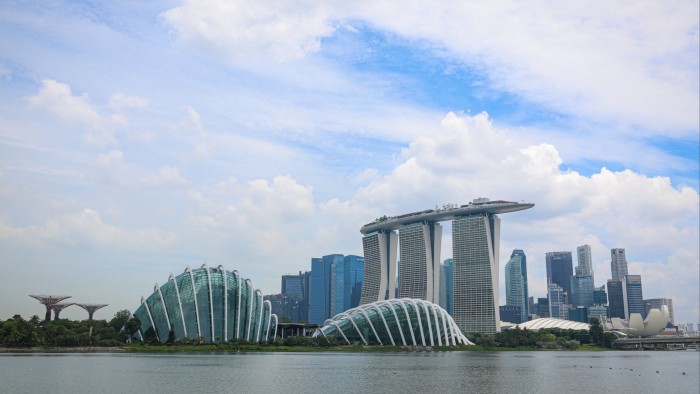
Last month, Singapore police seized hundreds of millions of dollars in financial assets, a yacht and a fleet of luxury cars, all allegedly linked to Cambodia’s murky and criminal world of online scams. The dramatic seizure of assets linked to Cambodia’s Prince Group, identified by US and UK authorities as a “transnational criminal empire”, has reignited questions over the financial centre’s soft underbelly and role as a conduit of illicit money.
We’re also reading . . .
The Joe Biden of India: Nitish Kumar’s re-election as chief minister of Bihar — despite his obvious infirmity — says much about the clash of hope and resignation in India, writes Ruchir Sharma.
North Korea: Former head of state Kim Yong-nam, who died on November 3 at the age of 97, was a unique political figure who never lost favour with the ruling Kim dynasty.
The fantasy of the hero assassin: The trial of Shinzo Abe’s killer is testing Japan’s moral limits, writes Leo Lewis
FT Magazine: In the heart of south India, a legal battle is raging over the future of a royal residence. Chris Kay reports on the war over Bangalore Palace.
Map of the day
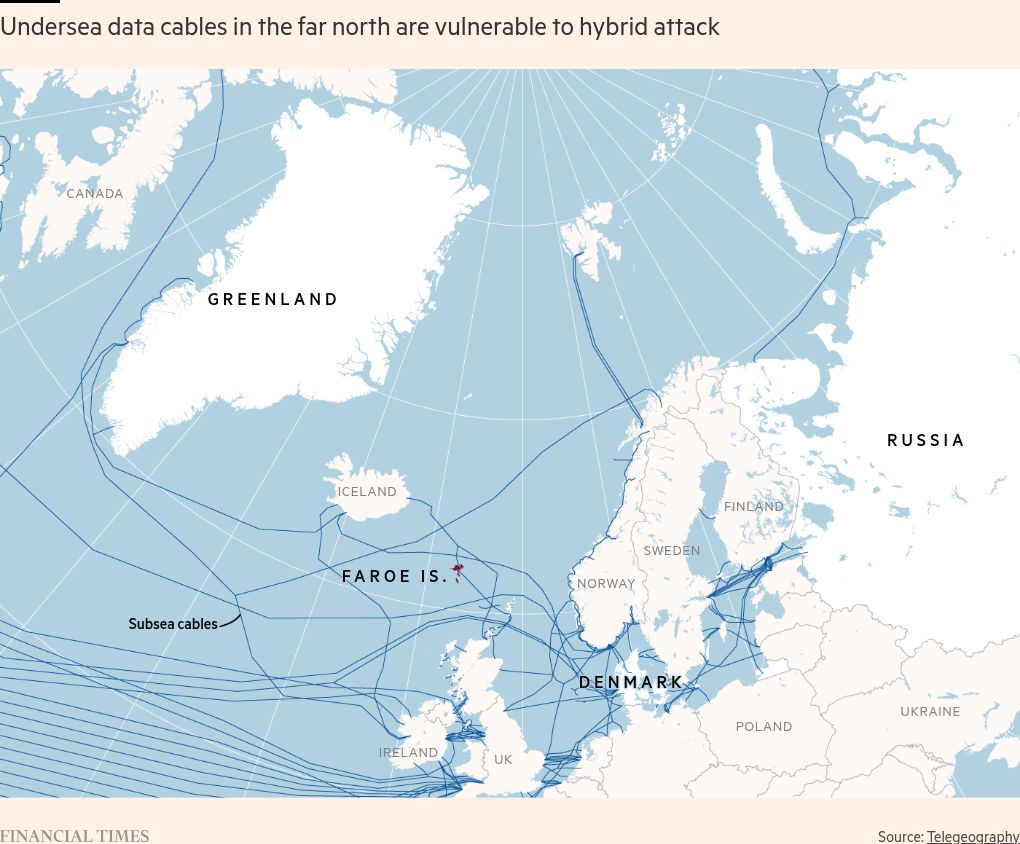
Arctic leaders have warned that the threat of hybrid warfare, including the sabotage of undersea internet cables by Russia and others, is moving from the Baltic Sea to the far north.
Take a break from the news . . .
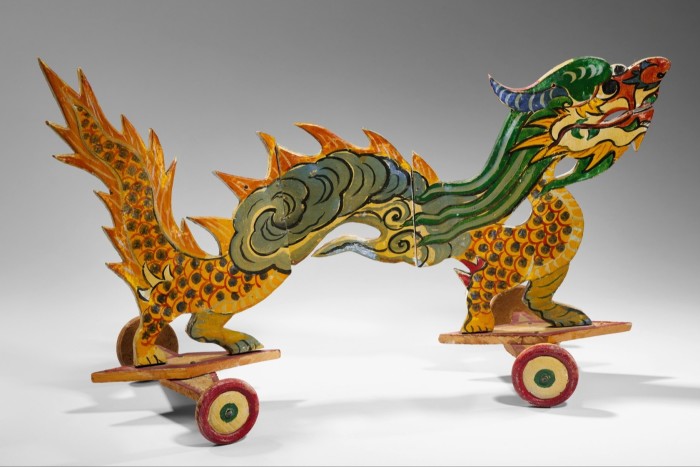
Who invented dragons? An exhibition in Paris explores the origins of the mythic creatures that have captivated humans even as they transform in imagination across culture and time.