Advertisement
As US tariffs on Chinese goods remain high, including on electric vehicles (EVs), batteries and solar cells, agreements that reduce friction, harmonise standards and streamline certification are becoming strategic tools. They don’t evade tariffs; they divert production and value-add steps across Southeast Asia, legally and at scale.
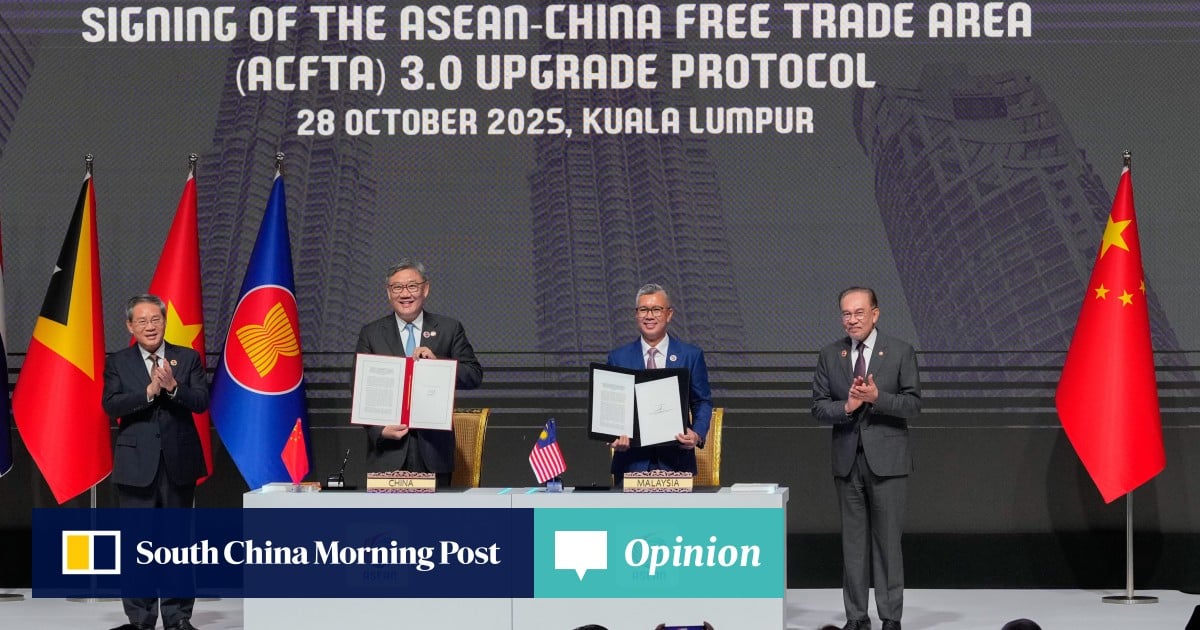
But the real shift is in the infrastructure that decides where factories operate, coders and auditors work, and origin and margins are booked. In embedding digital, green and supply chain rules, the pact turns Asean into a standards-based corridor for re-routing goods and rebooking value. It softens the impact of US tariffs on China without breaking any rules.
Since last year, electronic certificates of origin have been fully implemented across the Asean region under its Single Window initiative. Paired with the digital and customs chapters in the upgraded China-Asean pact, it means fewer paper bottlenecks, faster verification and cleaner audit trails. That’s exactly what a manufacturer needs to shift final assembly to Vietnam, Thailand or Malaysia, keeping Chinese inputs while certifying Asean origin with confidence.
Advertisement