Good morning from cold and wet London, but anywhere is better than polluted Delhi right now. It looks like a trade deal with the US is in the offing. Commerce minister Piyush Goyal has mentioned in several forums that India is at an advanced stage of trade talks. But we have been close before, so fingers crossed for this time around.
In today’s newsletter, the state of Bihar goes to the polls. But first, did the rationalisation of the goods and services tax do its job?
Tax implication
Has the government’s decision to rationalise the goods and services tax delivered on its promise of boosting consumption? While the headline numbers are pretty, the real picture is less rosy.
GST collections rose nearly 5 per cent for October compared with the previous year, despite the fact that taxes on most goods were reduced. But scratch the surface and a different picture emerges. Tax collections had been growing at an average of 9 per cent in the preceding months, and last month’s numbers were significantly lower. Also, October’s collections minus refunds is only up 0.6 per cent, since outflows from refunds swelled to 55 per cent. And the tax collected on imports was a major driver of the headline number, at 12.8 per cent. In comparison, the tax growth from domestic transactions was only up 2 per cent compared with the previous year.
This is surprising, since the consumption numbers were looking promising. Overall, according to estimates from the confederation of all India traders, total sales of goods and services after the tax cuts was Rs6tn ($68bn). However, this was concentrated in only a few sectors: consumer durables reported 10.2 per cent growth (compared to 6.3 per cent last year), with air conditioner sales doubling on the first day of new tax rates. More than 2mn two-wheelers were sold and passenger cars, too, saw a big uptick after the new rates kicked in. Gold purchases, usually a festival season staple, were muted this year because of record prices for the yellow metal.
Any sign of a resurgence of economic optimism or consumer confidence should have shown a much higher number for October. It was the main festival month this year. Also, Prime Minister Narendra Modi had announced the reforms in August, and consumers had postponed their purchases in order to make the most of the lower taxes, which kicked in later on September 22. The consumption numbers look much worse when considered in this light.
In the past two months the government had run a massive publicity campaign congratulating itself for the reforms. Although the rate rationalisation was undoubtedly a good move, it certainly hasn’t led to a consumption frenzy — at least not yet. Does this make the case for a rate cut? We’ll have to wait until December to find out.
Why do you think consumption is not picking up in India? Hit reply or email us at indiabrief@ft.com
Recommended stories
Businesses are pressing the US Supreme Court to strike down Donald Trump’s emergency tariff power. The hearing is this week.
OpenAI has struck a $38bn computing deal with Amazon.
The new hot job in AI: forward-deployed engineers.
A warmer world is making pregnancy riskier.
The Louvre heist suspects had previous convictions together.
Salman Rushdie’s The Eleventh Hour: a collection of death-infused short stories.
Poll bound

Bihar goes to the polls later this week. It is an important election for all parties concerned, and the political heavyweights of New Delhi are all in frenzied campaign mode. For Modi, this election is a real test of his popularity, coming as it does after Operation Sindoor and the (thus far) failed trade talks with the US. For the opposition, this is an opportunity to cash in on public sentiment against the incumbents.
The BJP’s National Democratic Alliance, which rules Bihar, is hopeful of another term, with Nitish Kumar, has been heading the state for 10 years, continuing as chief minister. The opposition is a coalition of parties, including Congress, Rashtriya Janata Dal, the Communist party of India and others. Both groups are fighting the election on the plank of jobs and development. The NDA is promising 10mn jobs in the state, and several large infrastructure projects. The opposition bloc, Mahagathbandhan, has promised a job to one member of every family. There are 27mn families in the state.
Bihar is one of India’s poorest states, with GDP per head of Rs52,379 (the most recent value quoted by Niti Ayog), a little over $600. Its share of the country’s GDP is a meagre 2.8 per cent. The state has traditionally voted along caste lines, and past promises of economic development have not translated significantly into results on the ground. But Kumar, who has in the past flip-flopped on party alliances in order to be able to hold on to power, has built a loyal following, especially among women voters. In 2015 he prohibited the sale of alcohol in the state. Later, he ran special schemes offering cash subsidies for women to buy bicycles. This time around, he has announced a scheme to deposit Rs10,000 in the bank accounts of women who are part of self-help groups. Voter turnouts in the state are usually higher among women, because men often find work outside the state.
Early opinion polls seem to indicate that these initiatives are working in the incumbent’s favour. We will know more next week, after polling closes on November 11.
Go figure
Indian women put up a terrific performance to win the women’s cricket world cup for the first time ever. Deepti Sharma was named player of the tournament. These are her stats.
My mantra
“You have to keep time for yourself to rejuvenate every day. Exercise, music, family — it could be any of these, or all of them. Secondly, I think technology is a great help. Today, I can be anywhere in the world and stay connected through emails and phone calls. Third, I think as leaders, it’s important to figure out what to delegate and what not to delegate, and how to empower. This helps strike the balance.”
T V Narendran, chief executive and managing director, Tata Steel
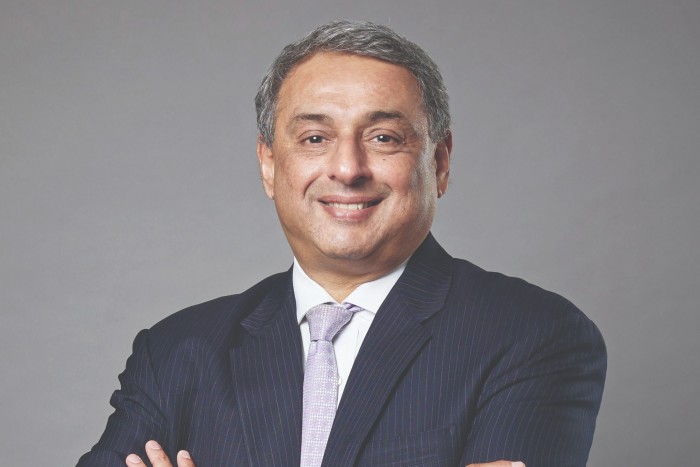
Each week, we invite a successful business leader to tell us their mantra for work and life. Want to know what your boss is thinking? Nominate them by replying to indiabrief@ft.com
Quick question
Do you think sentiment against the incumbent will affect Nitish Kumar’s chances in Bihar? Take part in our poll here.
Buzzer round
On Friday, we asked: The recent album launch of which famous musician has led to a surge in visitors to a German museum?
The answer is . . . Taylor Swift’s record-breaking latest album, The Life of a Showgirl. The museum houses a painting of Ophelia featured in the cover art of the album.
Ram Teja was first with the right answer, followed by Nitin Lall, Ranjan Kumar Sinha, Dinesh Dhanush, and Dirke Schenkl. Congratulations!
Thank you, P V Kannan, for the note about using AI to find the answer. We are counting on an honour system.
Thank you for reading. India Business Briefing is edited by Tee Zhuo. Please send feedback, suggestions (and gossip) to indiabrief@ft.com.