Unlock the Editor’s Digest for free
Roula Khalaf, Editor of the FT, selects her favourite stories in this weekly newsletter.
The centenary of the art deco movement is proving more than an aesthetic milestone for high jewellery houses; it is also a strategic opportunity. Van Cleef & Arpels is marking the moment with a substantial exhibition of 250 archival pieces, including recent acquisitions, 60 documents and its most patented innovations: the Minaudière vanity case, the prong-free Mystery setting technique and the Cadenas watch.
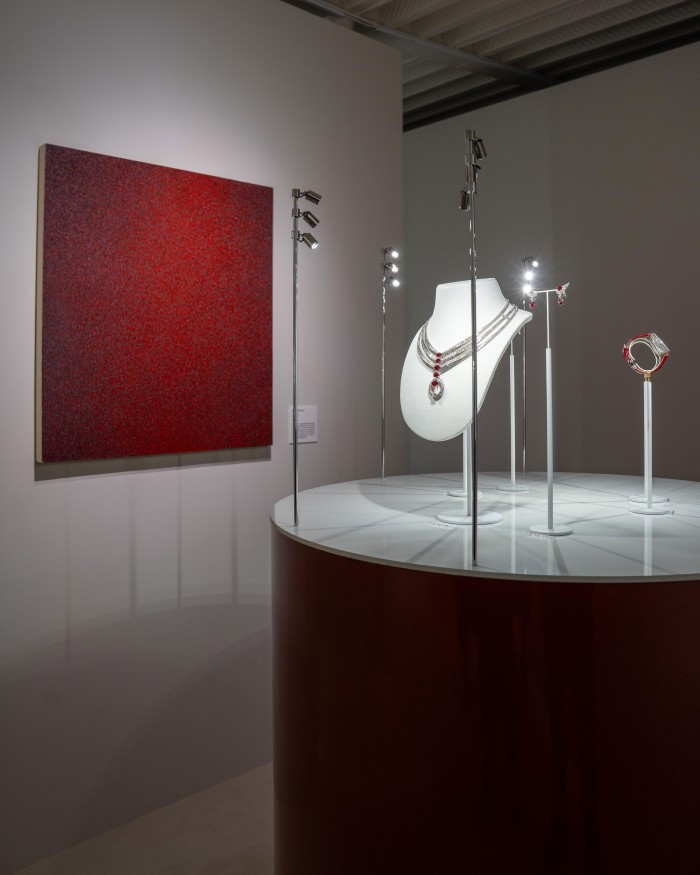
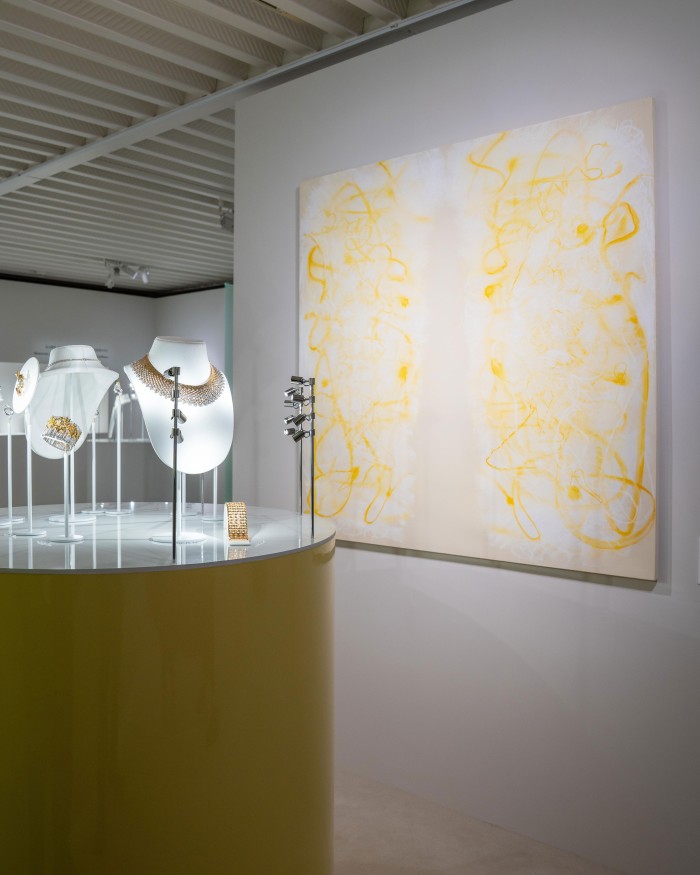
Yet rather than showcase the collection in Paris, the jeweller chose Tokyo’s Metropolitan Teien Art Museum for Timeless Art Deco with Van Cleef & Arpels High Jewellery. The decision reflects more than architectural affinity with the venue’s art deco mansion; it highlights Japan’s role as a haven for luxury demand and an important market for brand visibility. “Japan is becoming a strategic focus for high jewellery brands because it combines resilient local wealth with a surge in inbound tourism,” says Jeff Lindquist, a partner at consultancy BCG.
“We selected this museum because it is a genuine art deco mansion. The dialogue between our pieces and the architecture is striking, as we see common sources of inspiration,” says Alexandrine Maviel-Sonet, exhibitions director at Van Cleef & Arpels.
“We have put together a specific programme in connection with [the Van Cleef & Arpels-backed French school of jewellery arts] L’École des Arts Joailliers to offer conferences to the public linked to art deco in general, using of course the collection displayed in the museum and the architecture of the museum as context,” adds Maviel-Sonet.
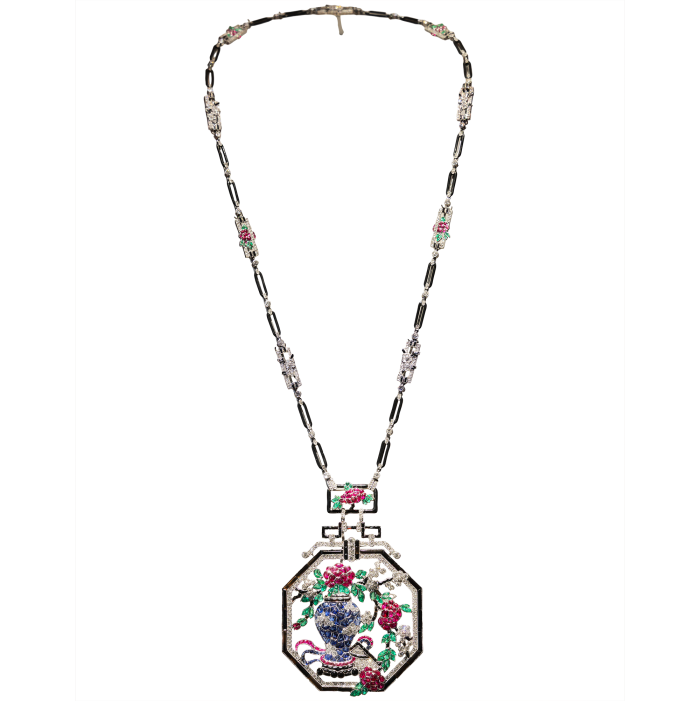
A VC&A 1924 necklace sautoir on display at Tokyo’s Metropolitan Teien Art Museum
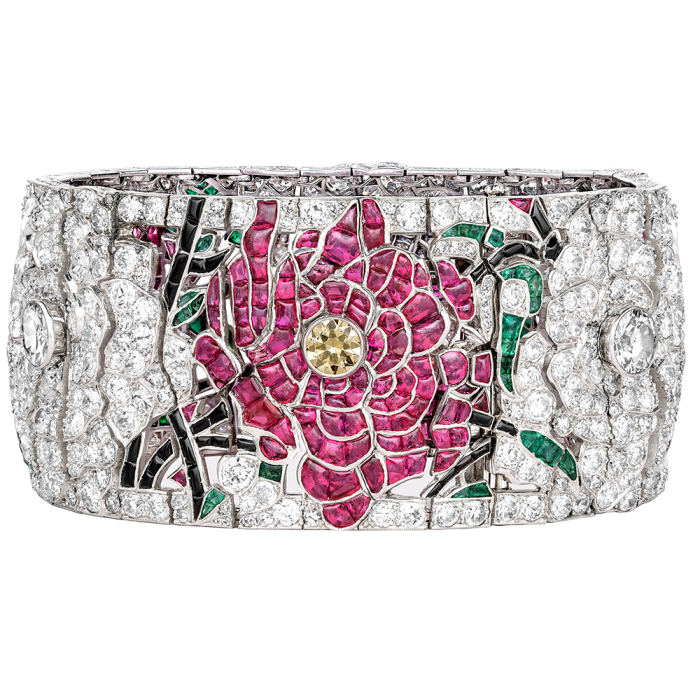
A VC&A bracelet representing the first Art Deco style
Beyond aesthetic affinities, however, there are also practical considerations. Located within a park, the museum attracts families, and the brand has developed an educational programme and activity days for children. After all, it is never too early to build brand awareness.
But, unlike China, where domestic luxury spending contracted 19 per cent in 2024 and is expected to decline further in 2025, Japan is seen as Asia’s “safe haven”, benefiting from a weak yen and Chinese travellers redirecting their shopping trips abroad closer to home. Expo 2025 in Osaka has drawn additional visitors, particularly as it comes to a close. At the same time, Lindquist says Japan’s affluent base continues to grow and “the bigger draw is the country’s long-standing appreciation for craftsmanship and heritage”. Cartier, Chaumet, Bvlgari and Pomellato have also invested heavily in exhibitions across Japan this year.
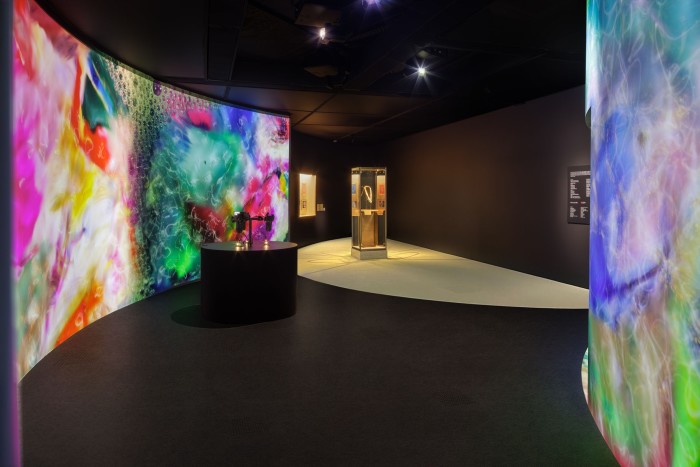
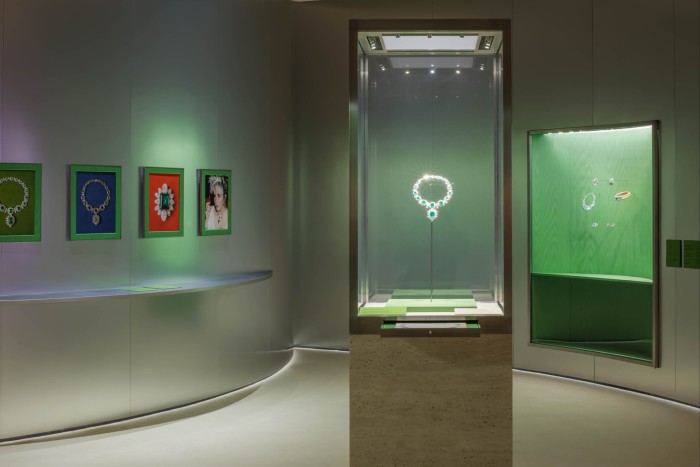
With Bvlgari Kaleidos: Colors, Cultures and Crafts at Tokyo’s National Art Center (until December 15), the Italian LVMH-owned brand returns to exhibiting in Japan after a 10-year hiatus, presenting around 350 pieces that celebrate colour — which is a defining trait of the brand. “It is both timely and symbolic. While not directly tied to the expo, it certainly aligns with the global cultural energy and attention that such moments bring,” says Jean-Christophe Babin, Bvlgari chief executive.
In Tokyo’s Omotesando Crossing Park, in the city’s central fashion district, Kering-owned Pomellato is presenting Pomellato, Helmut Newton & the ’80s (until October 6), an exhibition of 13 advertising visuals by photographer Helmut Newton for the Milanese brand. For the first time, these images depict jewellery not as static nature morte but as part of a fashion-lifestyle narrative.
Meanwhile, at the Osaka expo, near Cartier’s Women’s Pavilion, Chaumet is staging an exhibition (until October 13) where enlarged digital images and jewels immerse visitors in the brand’s naturalistic inspirations. “We were invited to represent France at the expo,” says Charles Leung, Chaumet chief executive.
It marks the second time Chaumet has participated in an official mission, after producing medals for the 2024 Paris Olympics. But it also makes economic sense since Japan historically has been a key market for Chaumet and, according to Leung, “is growing fast”, with a strong base of local customers now complemented by tourist spending.
Some brands have staged other shows this year, demonstrating why exhibitions have become a key part of the jewellery playbook. Cosmic Splendor: Jewelry from the Collections of Van Cleef & Arpels is at the American Museum of Natural History in New York until January 4; a show of Cartier designs is at London’s Victoria and Albert Museum until November 16; and Bvlgari opened the year of the snake celebration with an exhibition in Shanghai.
“Exhibitions serve a dual purpose,” says Claudia D’Arpizio, senior partner at consultancy Bain. “Primarily, they are awareness-building opportunities: they elevate brand equity and cultural legitimacy by showcasing heritage and craftsmanship, which in turn strengthens awareness and desirability among broader audiences. At the same time, they can also act as sales enablers. By creating occasions to engage with high-spending clients and potential [very important clients], exhibitions open the door to more personalised conversations that can ultimately be converted into one-to-one sales opportunities.”
Nevertheless, when it comes to gauging the success of an exhibition, it is not all about sales. “Success is not just about numbers — though attendance and media reach are, of course — we measure success by the emotional resonance,” says Bvlgari’s Babin. “When visitors leave feeling inspired, emotionally moved or with a deeper appreciation for our heritage and creativity, that’s when we know we’ve succeeded. Ultimately, it’s about how powerfully we can tell our story.”