Unlock the Editor’s Digest for free
Roula Khalaf, Editor of the FT, selects her favourite stories in this weekly newsletter.
Indira Gandhi attained the pinnacle of power when few women leaders anywhere could. As the daughter of India’s first prime minister, Jawaharlal Nehru, her 15 years in office — a decade spanning the 1960s and 70s, then another spell in the 1980s — seemed predestined. Yet it was anything but, as Srinath Raghavan recounts in this masterful study of her political life.
Nehru’s Congress party dominated post-independence politics, establishing a federal parliamentary democracy committed to secularism, economic planning and a non-aligned foreign policy. By the early 1960s, however, a humiliating defeat in the Sino-Indian border war and a faltering developmental model exposed serious limitations.
Nehru’s death in 1964 led the party’s old guard to approach Indira, believing that a diffident single mother with limited government experience would be easy to control, while ensuring dynastic continuity. She eventually agreed. But Congress lost many state assemblies in the 1967 general election. In response, the new prime minister concentrated executive power, reflecting what Raghavan calls a Caesarist mode of politics that characterised many democracies in the 1970s as well as the style of autocratic strongmen today.
Gandhi split her party in 1969 and called an early national poll two years later. She won a massive personal mandate, which grew after India’s military intervention in East Pakistan led to the creation of Bangladesh. Yet student agitation, rapid inflation and a mammoth railway strike engulfed her administration.
Facing parliamentary disqualification for electoral corruption amid calls for “total revolution” by the eminent Gandhian Jayaprakash Narayan, Gandhi declared a state of emergency in 1975, which suspended civil liberties, jailed political opponents and implemented draconian campaigns of family planning and slum demolition.
The opposition mobilised popular resentment to sweep the 1977 election, only to succumb to internal strife, allowing Gandhi’s return to power in 1980. Yet her cynical mishandling of regional conflicts, from Kashmir and the north-east to Punjab, contributed to her assassination in 1984.
Echoing previous scholarship, Raghavan details how Gandhi undermined cabinet government, parliamentary democracy and judicial independence.
However, several features distinguish his study. Gandhi confronted a triple crisis. The breakdown of the traditional Congress patronage networks amounted to a crisis of representation. A brewing Maoist insurgency in eastern India revealed a crisis of hegemony. Economic turmoil jeopardised the material basis of democratic consent, precipitating a crisis of governance.
Second, the narrative situates India in “the long 1970s”, a prolonged global interregnum that spanned political ferment in the 1960s and economic shocks in the 1970s, culminating in the neoliberal turn by the 1980s. Finally, Raghavan marshals recently declassified private correspondence and government documents. These rich archival sources reveal the thoughts of key protagonists, dramatise political intrigues and policy debates, and capture the texture of events.
“In the long 1970s, Indian democracy turned into a terrible beauty: terrible in its unheeding will to power; yet beautiful in its ability to precipitate the passions of millions, especially the poor,” Raghavan writes, borrowing from Yeats.
The book challenges several conventional wisdoms. Many observers attribute Gandhi’s political dominance to personal charisma; her ability to defeat political rivals nurtured this wider perception. Economic nationalisation reflected Gandhi’s leftist rhetoric and financed new anti-poverty schemes. But stagflation compelled piecemeal deregulation and conservative macroeconomics, revealing her pragmatism. Article 352 of the constitution authorised Gandhi to declare emergency rule. Yet she violated many of its provisions, making it a coup d’état.
What legacies persisted? A pro-business tilt and gradual liberalisation raised India’s growth trajectory from the 1980s onwards. Growing indebtedness foreshadowed the structural reforms of 1991. Dynastic politics expanded while political norms eroded. As Raghavan writes, “the historical changes wrought in her time certainly paved the way for some grotesque mediocrities to rule India.”
The book downplays various rights organisations that emerged in the 1970s. Their campaigns to uphold civil liberties and the socio-economic entitlements of marginalised citizens encouraged supreme court activism in the 1980s and transformed anti-poverty schemes into rights-based welfare in the 2000s.
More striking is the diffusion of power after Gandhi’s assassination. Fractured electoral verdicts produced minority coalition governments in New Delhi from 1989 to 2014. Regional parties representing lower castes, alongside the Hindu nationalist Bharatiya Janata party, acquired greater clout. Greater resources flowed from the centre to the states. Apex referee institutions, from the election commission and presidency to the supreme court, flexed greater authority.
Raghavan resists drawing explicit lessons. But many exist. Narendra Modi, India’s current prime minister, designated the June 25 anniversary of the 1975 emergency as “Constitution Assassination Day”. Opponents describe his rule an “undeclared emergency”. The extreme reconcentration of executive power reverberates powerfully in India today.
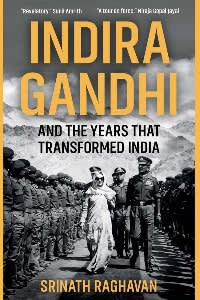
Indira Gandhi and the Years that Transformed India by Srinath Raghavan Yale University Press £25/$38, 384 pages
Sanjay Ruparelia is the author of ‘Divided We Govern: Coalition Politics in Modern India’ (Hurst)

Summer Books 2025
The best titles of the year so far. From politics, economics and history to art, food and, of course, fiction — FT writers choose their favourite reads of the year so far
Join our online book group on Facebook at FT Books Café and follow FT Weekend on Instagram, Bluesky and X