Stay informed with free updates
Simply sign up to the Indian business & finance myFT Digest — delivered directly to your inbox.
India’s largest conglomerate Tata Sons is expected to fend off a regulator’s order for an initial public offering that would have introduced greater transparency at the closely held group.
The Reserve Bank of India had wanted Tata Sons to list by the end of September in accordance with central bank rules that classify it as a major shadow lender. Analysts estimated the company could attract a valuation as high as $127bn.
But with fewer than 10 weeks to the deadline, Tata has yet to appoint bankers or file the necessary documents for an IPO, according to multiple people familiar with the matter.
Some of the people said Tata was now expecting the RBI to push back that deadline or even grant them a reprieve.
Last year the company formally applied to the RBI to change its designation as a core investment company and instead be registered in a lower category of non-bank financial companies not subject to mandatory listing.
The central bank said in January it was examining the request, but it has yet to announce a decision and has made no comment on what would happen if its deadline is not met.
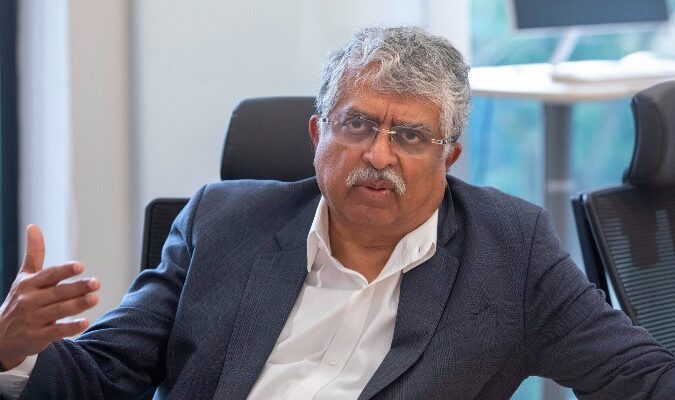
“It seems [Tata] are just playing out the clock,” said Nirmalya Kumar, a former Tata executive who is now a visiting professor at the Indian School of Business.
“A company that is that big and central to the Indian economy . . . has to be open to public scrutiny and transparency,” he added. “The RBI cannot be faulted in asking for visibility.”
India Business Briefing
The Indian professional’s must-read on business and policy in the world’s fastest-growing big economy. Sign up for the newsletter here
Tata Sons is not a conventional lender, but it invests in other entities within the sprawling conglomerate, which includes 26 listed companies and more than 300 other subsidiaries. It holds stakes in some of India’s largest companies, including Tata Consultancy Services, Air India and Jaguar Land Rover owner Tata Motors.
More than 95 per cent of the holding company’s net assets are made up of investments and loans to group associates and subsidiaries, according to its latest annual report.
The Mumbai-based conglomerate was founded more than 150 years ago by a family of Parsees once involved in the opium trade. It has established a reputation for ethical conduct, good governance and charitable endeavours to which much of the controlling group’s dividends are deployed.
Charitable trusts endowed by Tata family members hold 66 per cent of Tata Sons and wield significant behind-the-scenes influence. The trusts convened a board meeting on Monday, according to a person familiar with the matter.
However, the structure has led to criticism of how the holding company is run, including from its late former chair Cyrus Mistry, whose family-owned Shapoorji Pallonji engineering and construction group holds an 18 per cent stake.
Mistry, whose family has had ties to the Tatas for generations, openly feuded in a years-long leadership battle with his venerated predecessor Ratan Tata, who died last year. Debt-ridden Shapoorji Pallonji has been pushing for a listing of Tata Sons to free up its holding.
The Tata family and trusts “have no compulsion or incentive to list Tata Sons”, as they do not need to unlock value or raise capital to fund growth, said Sougata Ray, professor and chair at the Thomas Schmidheiny Centre for Family Enterprise in Hyderabad.
However, “[Shapoorji Pallonji] is in serious need for capital,” added Ray, who has also served on Tata boards. “They will surely benefit from the IPO.”
Tata Sons and Tata Trusts declined to comment. The RBI, India’s capital markets regulator, and Shapoorji Pallonji did not respond to requests for comment.
In a bid to shed its “upper-layer” shadow bank status, Tata Sons in the financial year to the end of March pared down its gross debt to zero. It is also spinning off its financial services company, Tata Capital, in an expected $2bn IPO after the RBI had also ordered it to list.
If Tata Sons were to go public, it could fetch a valuation of more than $93bn, private wealth manager Spark Capital estimated last year, while financial analysts at ICICI Securities last year valued it as high as $127bn.
Kumar, the former Tata executive, said sovereign wealth funds seeking investments in India would “salivate” at the opportunity to acquire a block of Tata Sons.
“Where can you deploy $20bn-$30bn in one go? Those kinds of opportunities are few and far between,” said Kumar.