Unlock the Editor’s Digest for free
Roula Khalaf, Editor of the FT, selects her favourite stories in this weekly newsletter.
It’s a cliché but it’s true: Tokyo changes after dark. A “scrap and build” approach to housing and commercial property since the end of the second world war has left the relatively young Japanese capital feeling disjointed. There’s no uniformity to the architecture. At least, not until the sun sets and the lights come on. Suddenly, bathed in neon, you find yourself sharing the city with Akira and Ichi the Killer.
When night descends, the streets become a kind of flickering, luminescent jungle. Tourists flock to see it, and various neon tours and cyberpunk photography walks have evolved to cater to them. Most intriguing of all, though, is the growing popularity of kojo yakei trips — night-time cruises around the waterside factories of Yokohama and Kawasaki, the industrial ports just to the south of the capital. Having arrived at Yokohama’s Red Brick Warehouse pier with minutes to spare, I’m ushered aboard a packed deck and offered a choice of coffee, water or beer.
Back in the UK, a tour around, say, the Billingham Manufacturing Plant probably wouldn’t strike much of a chord, but this tour is packed with eager Japanese sightseers, mostly under 35, many of them young couples on dates.
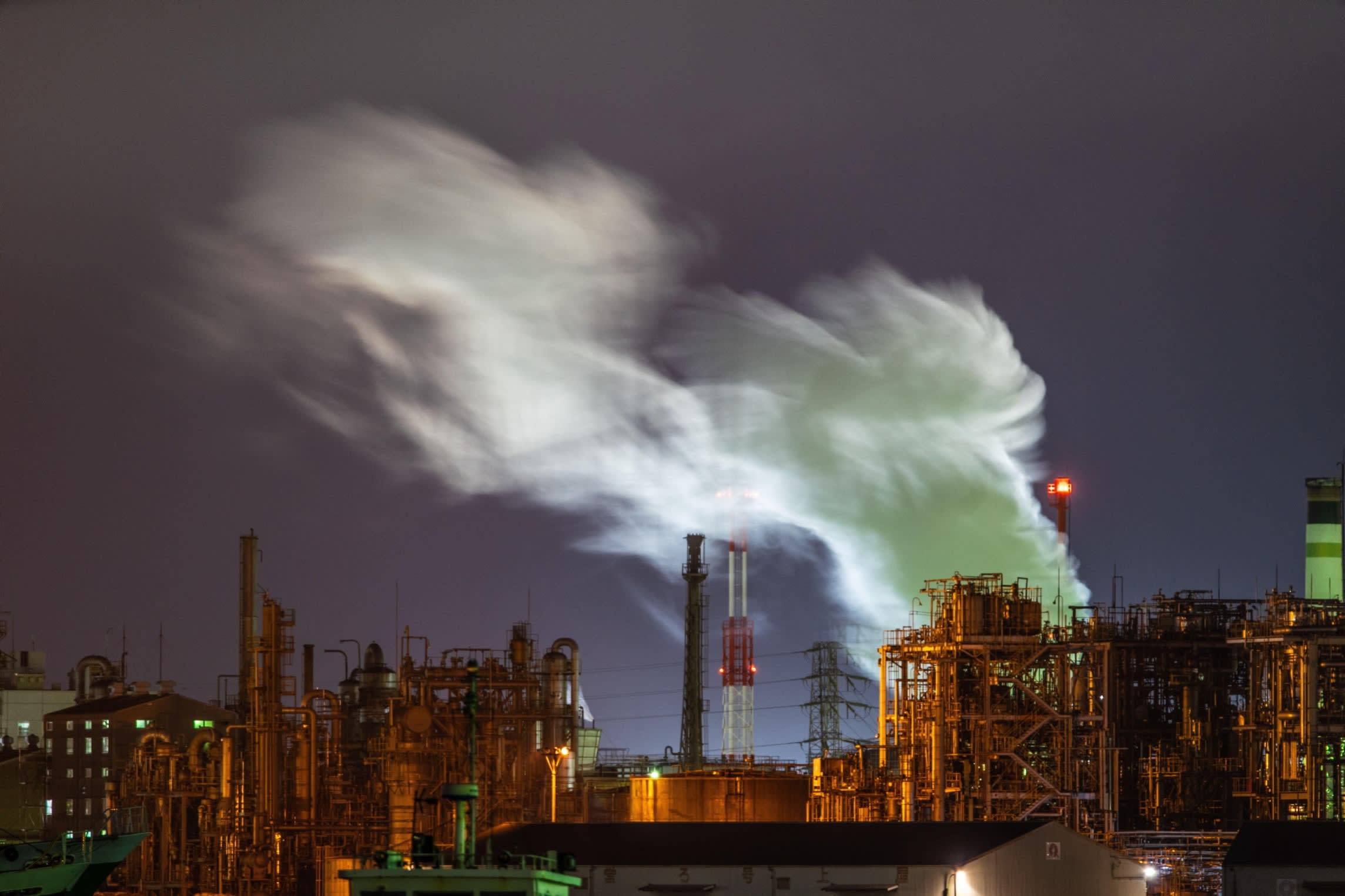
Kojo yakei (literally “factory night view”) tours are the result of a trend that’s been developing since the publication of a book called Kojo Moe, (Factory Passion) in 2007, which unexpectedly became a bestseller. Some managers have expressed concern that the growing number of Kojo Moe adherents could unwittingly reveal trade secrets; there’s even been reports of some visitors jumping the fences to get better photographs, or becoming sick due to prolonged exposure to hazardous fumes.
The boat shudders away from the pier. The Red Brick Warehouse includes a shopping mall, restaurants and event spaces; an outdoor rock concert is under way and sections of the crowd turn and wave to our departing vessel. Picking up speed, we move towards Keihin Industrial Zone — home to factories of multinational goliaths like Fujitsu, Toshiba and JFE Steel.
There’s an impeccable tidiness to Japanese modernity, which arrived at breakneck speed during the Meiji period (1868-1912). The infamous writer Yukio Mishima likened this era to “an anxious housewife . . . hoping to impress the guests with the immaculate, idealised life of her household”. The cruise passes chemical plants with vast spherical storage tanks and, in the distance, you can make out Toa Oil and the Jera thermal power station, a tangle of pipes. The sun’s beginning to set over the factories now. Their lights are coming on. They’re starting to change.
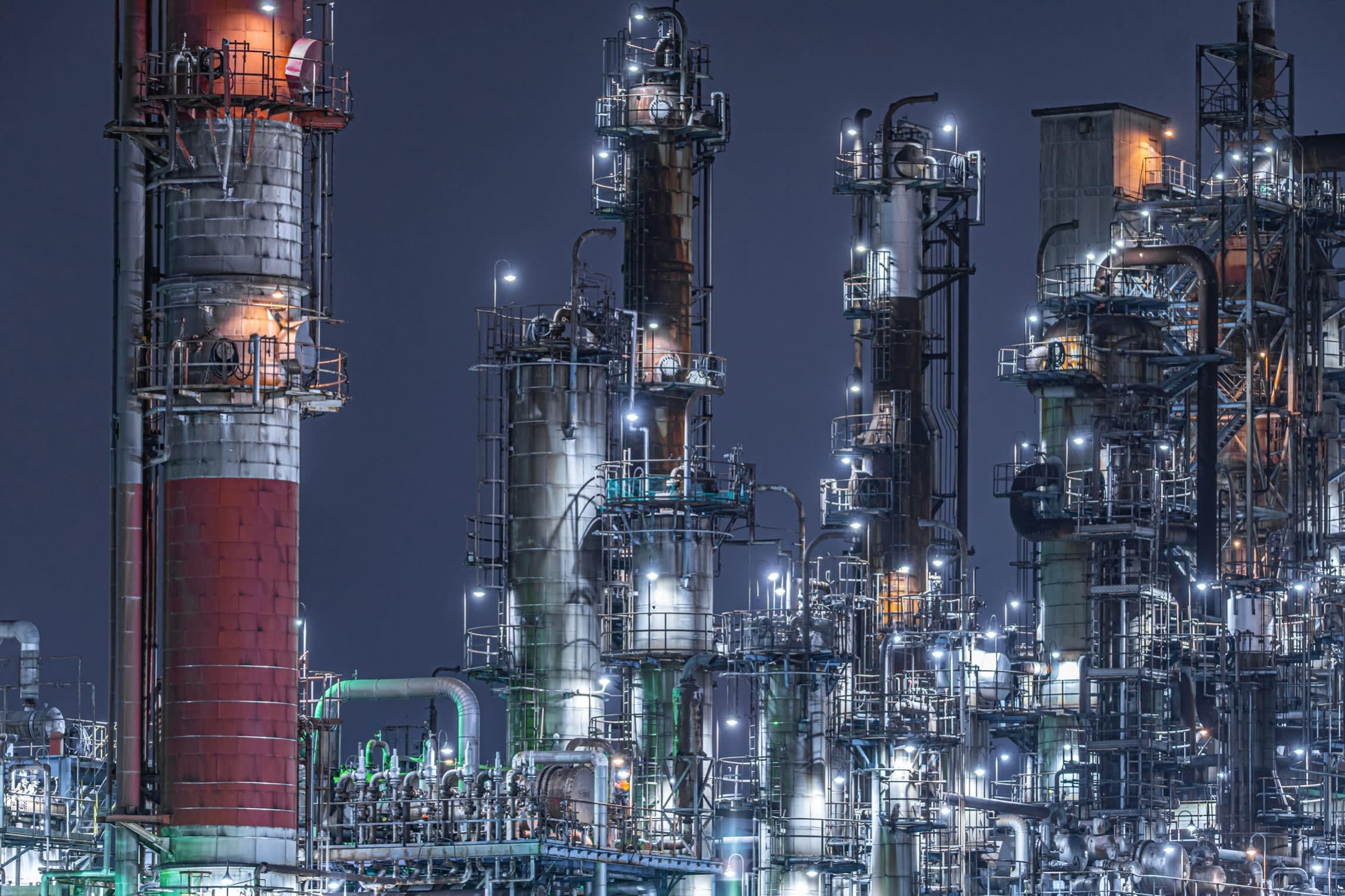
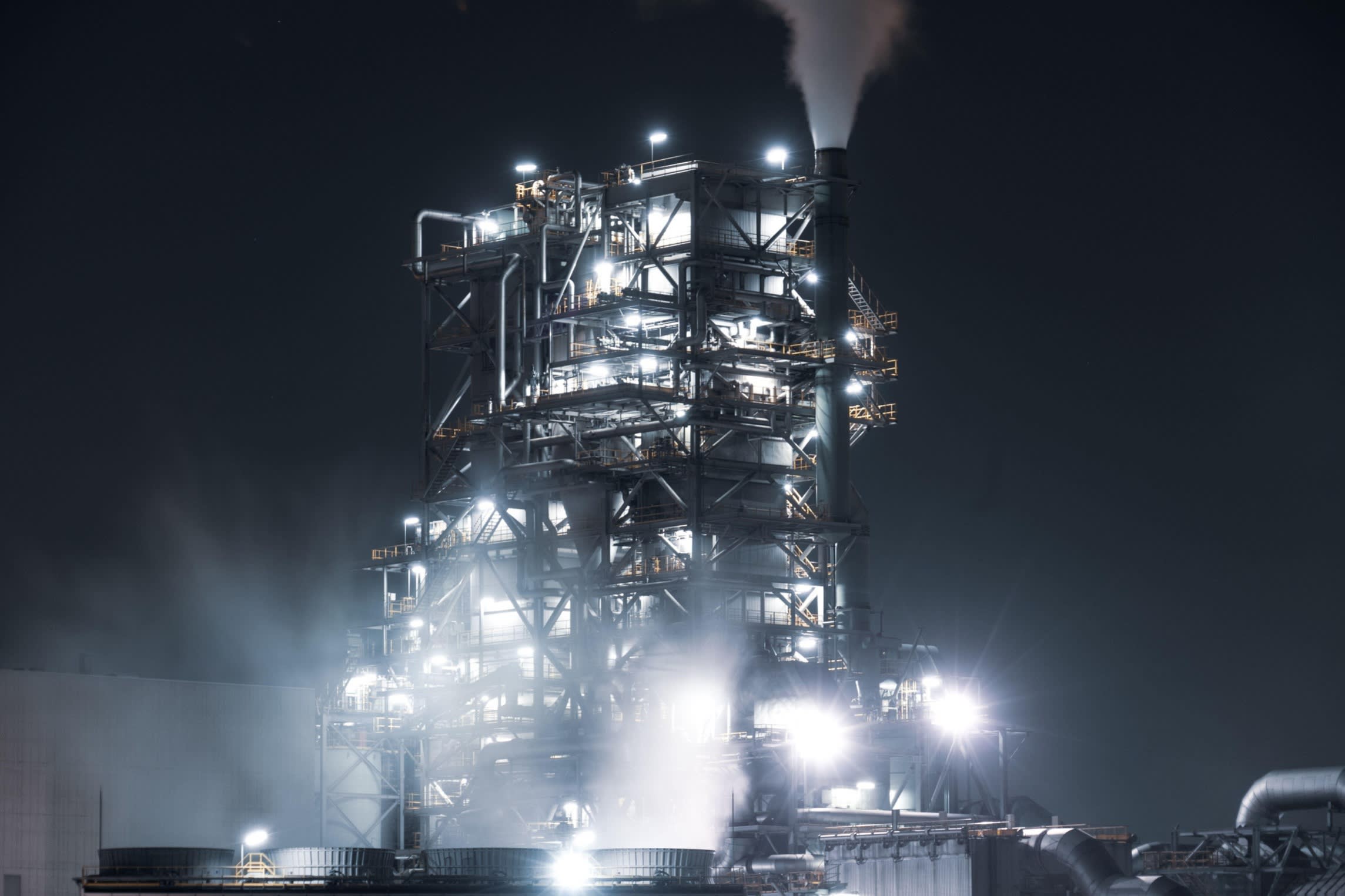
Passengers rush from one side of the boat to the other, pointing their cameras and exclaiming wildly. There’s a tangible air of reverence on deck. Never before have I seen such a profoundly aesthetic industrial landscape: the glimmering exposed pipes, the lights carrying across the water, in one place a single file line of trees partially concealing their metal anatomy.
In Shintō, Japan’s largest religion, spirits (or kami) are everywhere and constantly changing. Kami are amoral and manifest in the mountains, the sea, in disease and natural disasters. According to theologian Martin Palmer, “some of the founders of the great Japanese multinational companies are now revered as kami, because how could they have achieved what they achieved if they were not filled with some kind of greater power and authority?”
These buildings — like the Resonac plant, a recycling facility now looming up in front of us, known as “the White Castle” for its glow — have their own resplendent animism.
As the boat begins to turn back, I buy a can of lager (alcohol seems like a rigid pillar of the proceedings here) and head to the back of the boat for a cigarette. From there, you can take in the whole panorama as it grows in front of you. The best thing about the kojo yakei is that you disassociate. You stop seeing the buildings in terms of the raw materials, industrial output and engineering. Instead, they suddenly take on another life as oblique monuments or public art. Pulling up to a smokestack of a refinery, there’s a moment of anticipatory silence. Then, fire erupts from an industrial chimney. You can feel the heat of the flames. Onlookers clap and cheer.
Details
Miles Ellingham was a guest of Reserved Cruise (reservedcruise.com); the 90-minute cruise costs ¥6,000 (£31). The Red Brick Warehouse pier is about 45 minutes by train from central Tokyo; the closest stations are Sakuragicho, Bashamichi, Nihon Odori and Minato Mirai
Find out about our latest stories first — follow FT Weekend on Instagram and X, and sign up to receive the FT Weekend newsletter every Saturday morning