“Our portable water filter … offers a sustainable solution to the long-standing issue of suspended solids pollution in water sources,” they said.
Nanoplastics less than 1 micrometre in length, or 1,000 nanometres, are tiny enough to pass through the intestines and lungs, to directly enter the bloodstream. They can then travel to organs such as the heart and brain, according to the scientists.
Water, water everywhere? Not necessarily in rain-ridden Malaysia
Water, water everywhere? Not necessarily in rain-ridden Malaysia
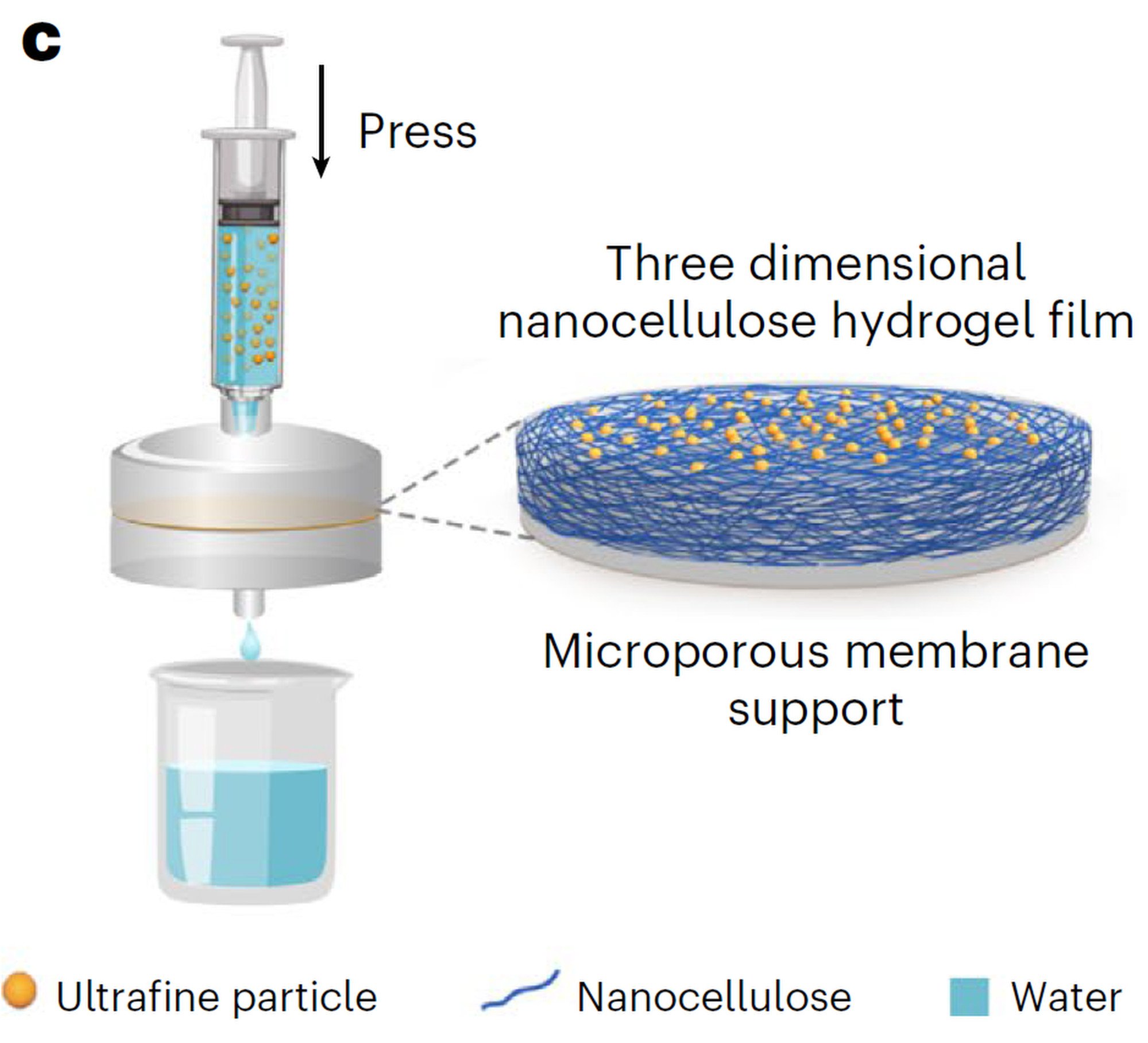
With simple training, users can operate the device using only the push of a hand.
The system purifies water seven times faster than existing commercial ultrafiltration membranes and maintains nearly 100 per cent particle removal efficiency after 30 uses, according to the researchers.
Co-lead author Yu Guihua, a professor at the Walker Department of Mechanical Engineering and Texas Materials Institute at the University of Texas at Austin, said the filtered water could also be used for various household needs.
“The as-developed filter can be used to remove different types of suspended particles from various water sources with high efficiency. This makes it suitable for everyday tasks,” he said.

02:24
These women are risking their lives to collect drinking water amid shortage in Indian village
These women are risking their lives to collect drinking water amid shortage in Indian village
The team said the filtered water complied with related hygiene standards. The World Health Organization said many countries considered its guidelines for drinking-water quality when setting national regulations and standards.
Yu said the scientists planned to work with governments and organisations in developing countries to distribute the device for free to households.
Faster, cheaper way to check for microplastics in Hong Kong water revealed
Faster, cheaper way to check for microplastics in Hong Kong water revealed
In the future, they plan to use artificial intelligence tools to research and design filter materials that could see wider use.
Co-lead author Chen Wenshuai, a professor at the College of Material Science and Engineering at Northeast Forestry University in Harbin, said new AI-generated designs could make the filter more accessible.
“The current filter sets a high standard in removing particles with ultrafine sizes. With AI, we hope to effectively scale up production of the bio-based nanofibre hydrogel filter and lower the manufacturing costs, thus improving its potential for wide community use,” he said.