While he is now most likely to lose these positions as well, there was no mention of them in Tuesday’s terse statement, leaving the public guessing as to the cause of this abrupt change.
04:17
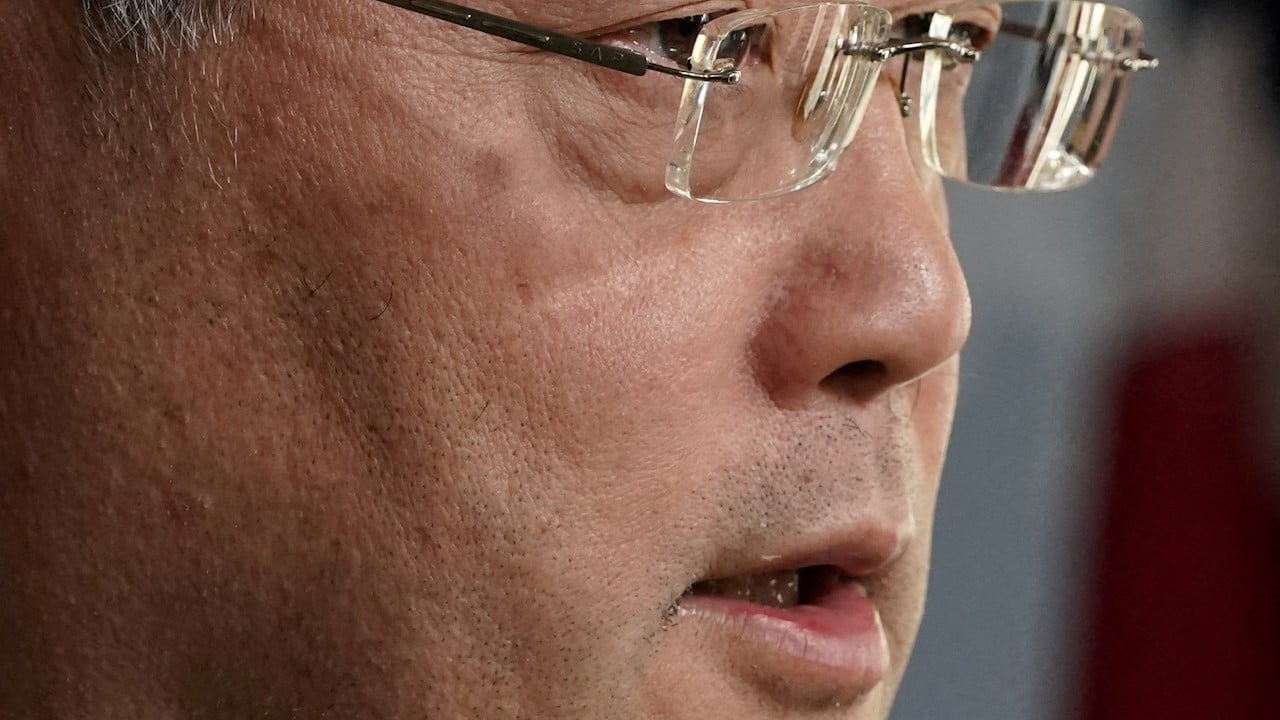
Mystery over missing Chinese foreign minister takes toll on country’s international image
Equally puzzling was his replacement. Instead of promoting another candidate, the leadership passed the position to Wang, who was promoted to the powerful Politburo just months ago and was a rank higher than Qin.
This makes Wang one of the most powerful foreign ministers in decades and the first Politburo member since Qian Qichen to hold the position, which is mainly responsible for policy implementation. Qian was both China’s foreign minister and a Politburo member between 1992 and 1998.
Observers said that both Qin’s removal, which made him China’s shortest-serving foreign minister, and the reappointment of Wang, who was foreign minister during Xi’s first two terms, as his successor were unprecedented.
While details about the nature of the sudden reshuffle remain scant, they noted the announcement was deliberately vague, raising questions about Qin’s fate, which may yet be undecided.
Wang, the director of the Office of the Central Foreign Affairs Commission, has been standing in during Qin’s absence over the past few weeks.
“The fact that Wang is picked to replace Qin as the country’s new foreign minister in the middle of a major personnel crisis in mainland politics says a lot about Wang’s close ties with the top leader,” said Alfred Wu, an associate professor at the Lee Kuan Yew School of Public Policy in Singapore.
Apart from reinforcing Wang’s status as the country’s highest-ranking diplomat, it also underlined the veteran diplomat “remains Xi’s most trusted foreign policy aide to oversee foreign affairs”, Wu said.
Wang, who turns 70 in October, was promoted to the Politburo, the party’s top echelon of power, at the Communist Party’s national congress last year.
He has been attending a series of diplomatic activities including the Brics gathering under way in South Africa and meetings with former US secretaries of state Henry Kissinger and John Kerry in China last week.
The decision to remove Qin from his post was made at a special session of the National People’s Congress Standing Committee, which took place one day after the Politburo convened.
According to rules updated in June last year, the NPC Standing Committee holds a session once every two months, but in practice it usually holds them near the end of even-numbered months. An interim session for special cases can be scheduled by the committee’s chairman.
Qin’s removal as foreign minister is in line with the Organic Law of the National People’s Congress, which came into effect in March 2021. The rule empowers the Standing Committee rather than a national congress to appoint or remove from office some members of the State Council.
But the brief announcement by state media suggested the top legislature made no decision to remove Qin as state councillor, a position that ranks above a cabinet minister.
Analysts said the move was rather unusual, considering the NPC Standing Committee’s removal in 2018 of Yang Jing, a top assistant to former premier Li Keqiang, as both state councillor and secretary general of the cabinet.
Qin was last seen in public during a meeting of senior diplomats from Russia, Vietnam and Sri Lanka on June 25, according to China’s foreign ministry.
When asked on Tuesday before the official announcement about who would take on Qin’s responsibilities, foreign ministry spokeswoman Mao Ning said: “I can tell you this, China’s diplomatic affairs or work on the front is being smoothly advanced.”
But Beijing’s secretive handling of the drama has raised questions about the Chinese government’s opaque decision-making process and increased confusion and mistrust in the West.
Related posts

Will Taiwan’s decentralised military model raise more questions than it solves?
Taiwan’s military has stepped up training in decentralised command and control, aiming to ensure frontline units...-
Taiwan intervention may just spell the end of the West
The horrors of war are so seared into the minds of people that the resultant images... -
Patent cliffhanger: will China biotech throw Big Pharma a lifeline?
If pharmaceutical drug patents are an hourglass turned over on the day of approval – with...